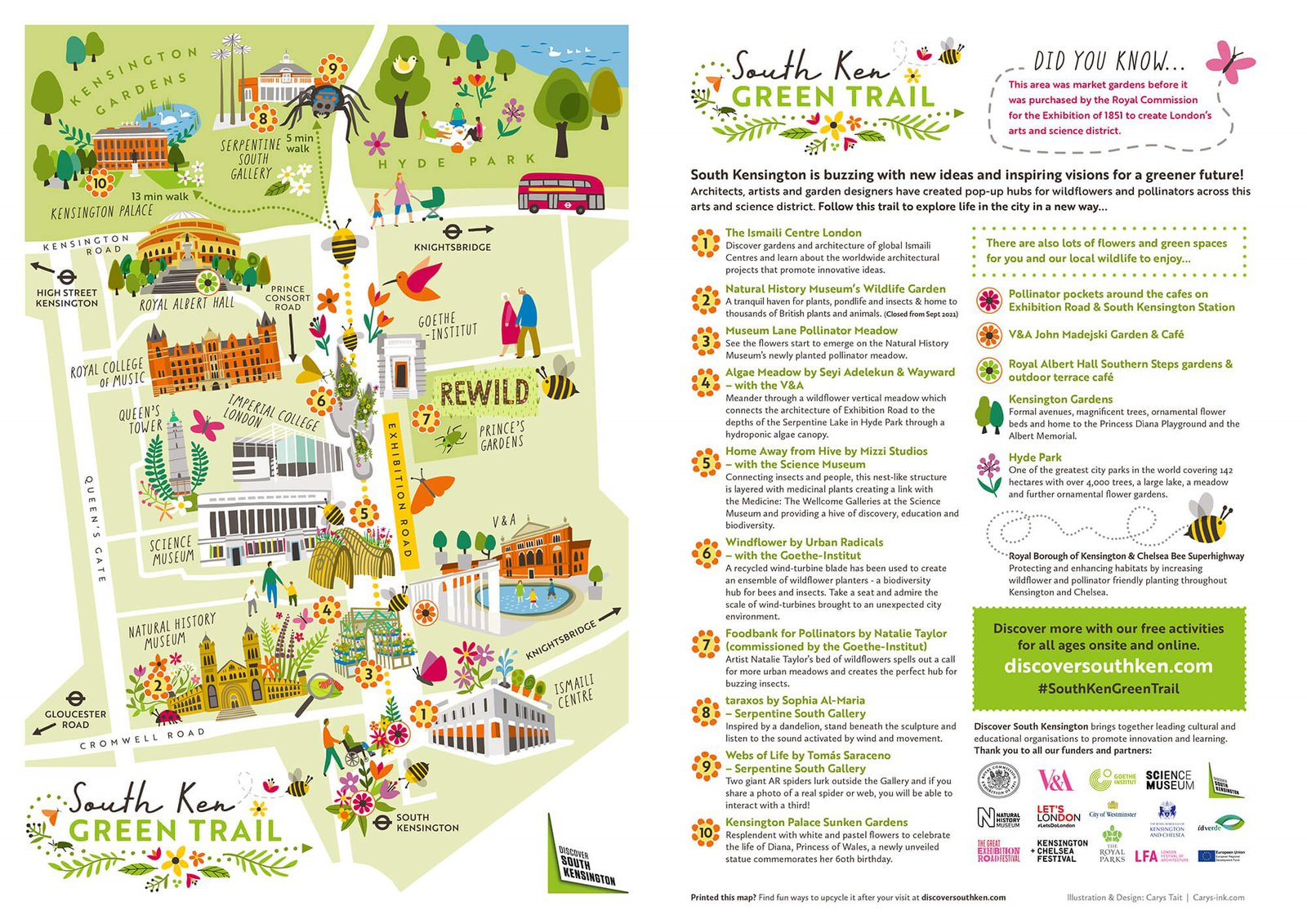
Featuring an algae canopy, a nest-like timber structure and repurposed wind turbine blades, the installations demonstrated how greenery and sustainable design could be integrated into London’s public spaces. The project also supported the post-pandemic recovery of South Kensington’s arts and science district, encouraging visitors to reconnect with nature in the heart of the capital.
The free-to-visit installations formed part of a walking trail linking green spaces, planting and biodiversity initiatives across the district. Visitors could download a trail map, discover hidden pockets of urban nature and take part in activities and events offering inspiration for a greener future.
The South Ken Green Trail brought together emerging design talent, leading cultural institutions and scientific expertise. Following a competition organised by the London Festival of Architecture (LFA) and South Ken Culture Quarter, three design teams worked with the V&A South Kensington, Science Museum and Goethe-Institut to create installations that invited visitors to explore Exhibition Road and its surroundings.
Combining creative design with research into biodiversity and sustainability, the installations highlighted South Kensington’s role as a centre for cultural exchange, scientific discovery and debate about some of society’s most pressing challenges.
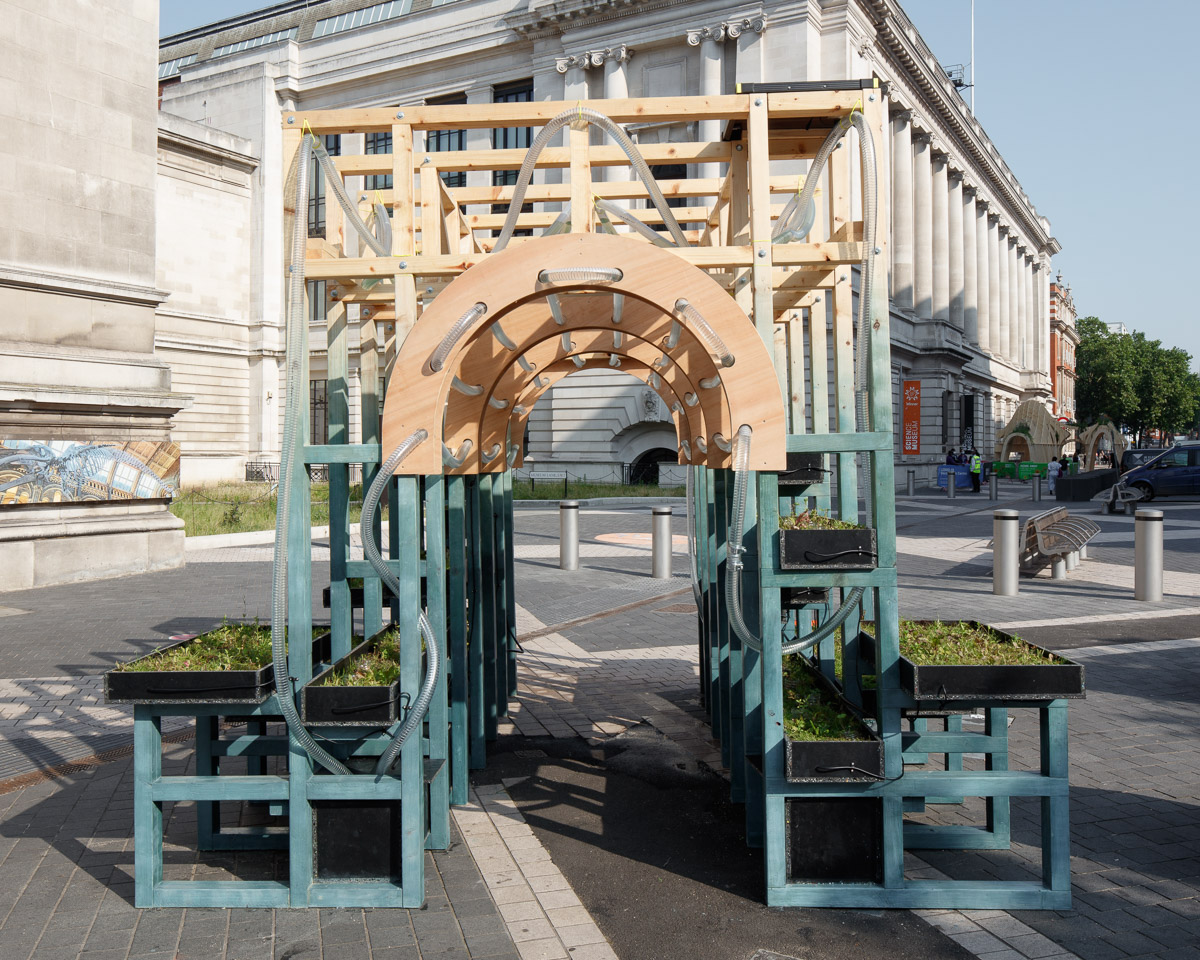
Created by Seyi Adelekun and Wayward in collaboration with the V&A South Kensington, The Algae Meadow brought together landscape design, wildflowers and hydroponic algae. The project also involved specialists from UCL and Imperial College London.
Located outside the Natural History Museum, the installation invited visitors to wander through a vertical wildflower meadow beneath an algae canopy. Its design connected the architecture of Exhibition Road with the natural environment of the Serpentine Lake in Hyde Park.
Constructed using locally sourced, responsibly sourced and recycled materials, the project was also a community build initiative. It created opportunities for London-based students and volunteers from the Black Females in Architecture network to contribute to the installation.
The result offered a creative demonstration of how planting, sustainable materials and innovative design could bring nature into a busy urban environment.
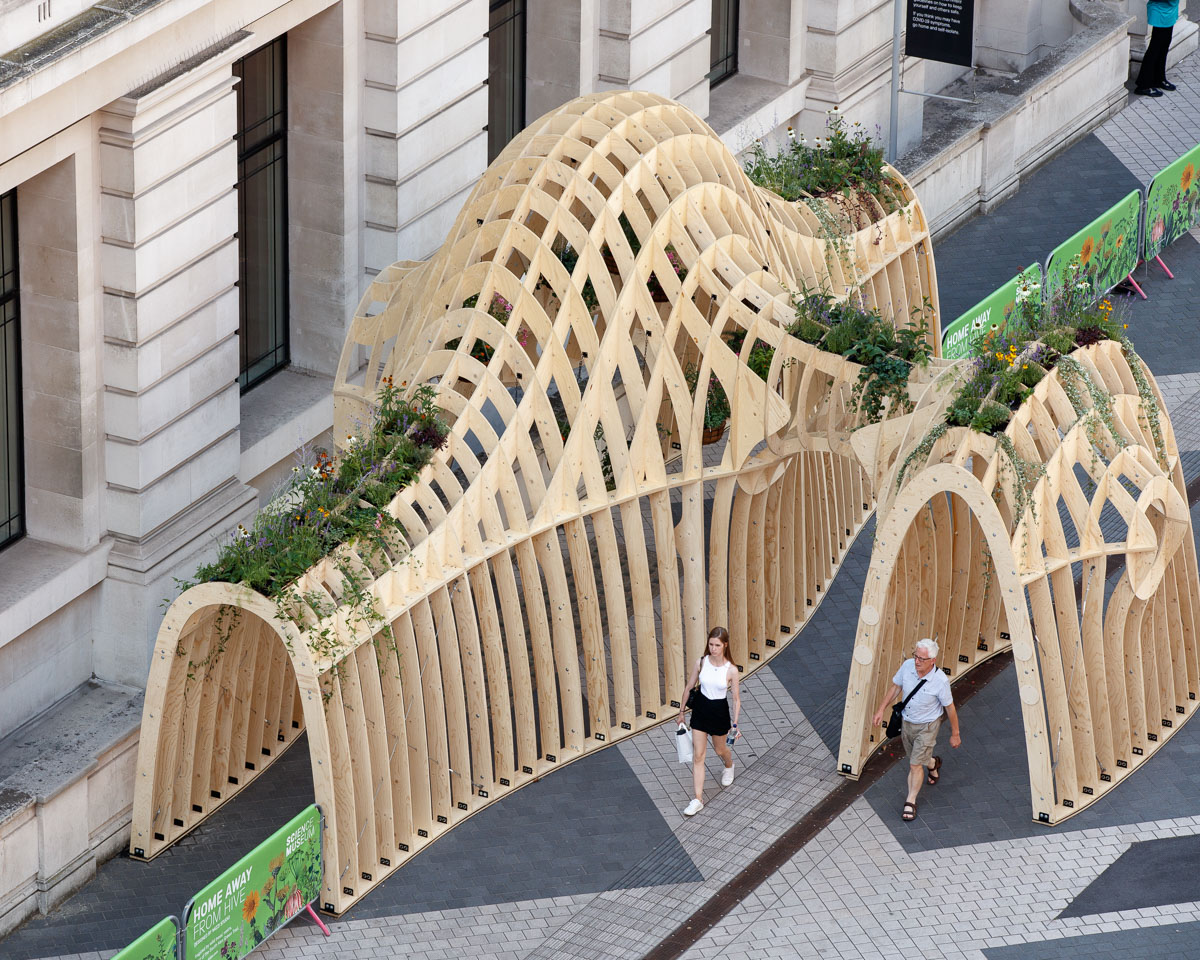
At the Science Museum, Mizzi Studio created Home away from Hive, an organic, nest-like timber lattice layered with medicinal and pollinator-friendly plants. The planting was developed in consultation with garden designers from the Royal Botanic Gardens, Kew, and the project was built by Firecracker Works.
Inspired by natural earth mounds and beehives, the structure provided an immersive space for discovery, education and biodiversity. Visitors could walk around and through the timber framework, experiencing the interplay of natural materials, daylight and greenery.
The installation also connected with the Science Museum’s Medicine: The Wellcome Galleries and Kensington and Chelsea Council’s Bee SuperHighway, highlighting the importance of pollinators and urban habitats.
By creating space for both people and insects, Home away from Hive explored how public installations can support wildlife while offering visitors a place to pause, reflect and reconnect with nature.
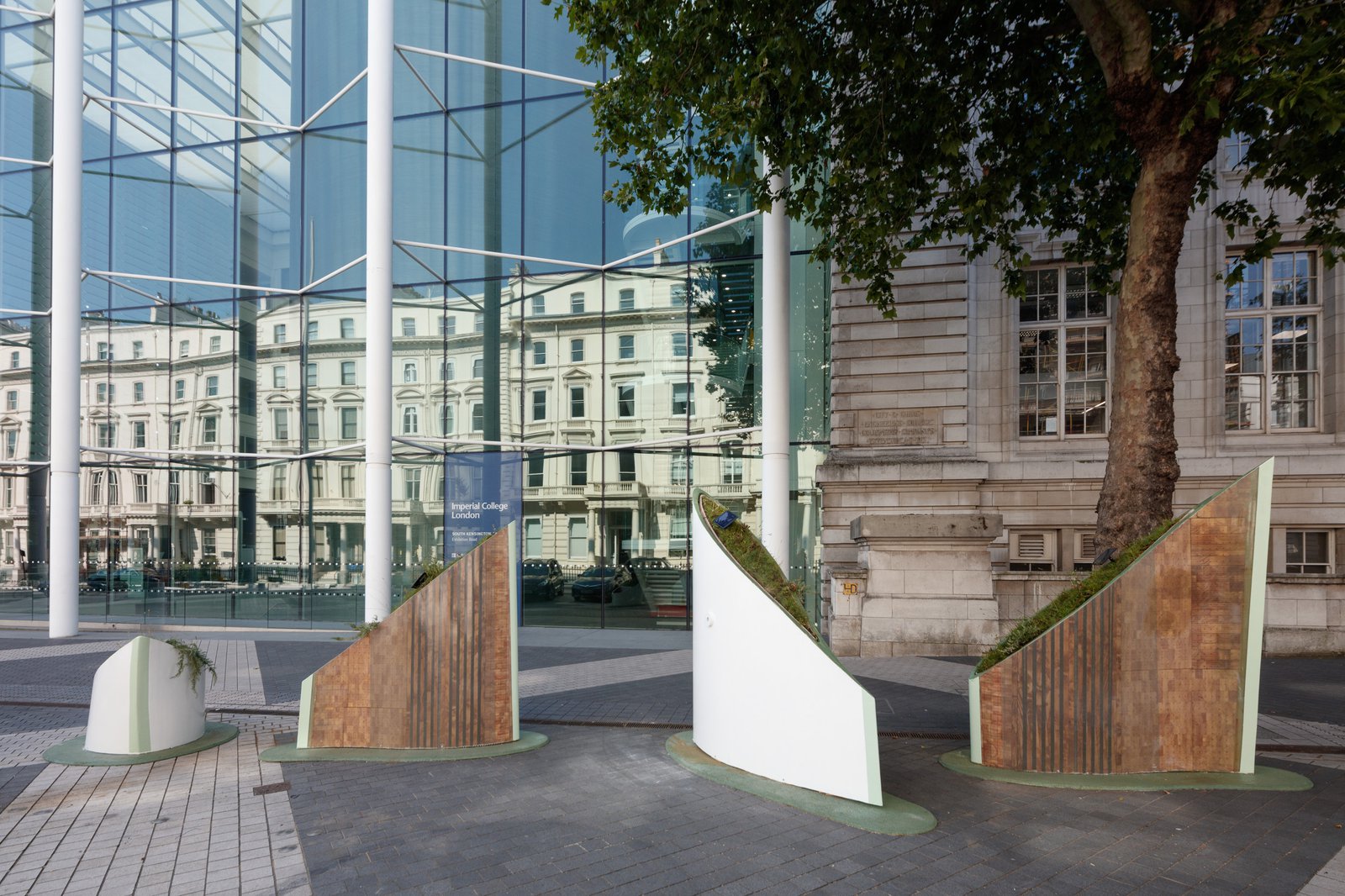
Outside the Goethe-Institut, Windflower, created by Urban Radicals with Adam Harris, demonstrated how reclaimed industrial materials can be repurposed through creative design.
The installation transformed a decommissioned wind turbine blade into a striking public-space feature, bringing the scale and unexpected beauty of renewable energy infrastructure into central London.
Planted with wildflowers to attract pollinators, the repurposed blade also provided a place for visitors to walk through, sit on and enjoy. By giving the component a second life, Windflower connected sustainable design, renewable energy and urban biodiversity in a single installation.
Beyond the three installations, the South Ken Green Trail encouraged visitors to discover the green spaces and biodiversity initiatives already present across South Kensington.
The project formed part of a wider programme of public engagement in the run-up to COP26, the 2021 United Nations Climate Change Conference. By connecting cultural venues, public spaces and environmental initiatives, the trail encouraged conversations about climate change and practical ways to create greener cities.
It also responded to a growing public appreciation of nature and outdoor spaces following the COVID-19 lockdowns. Through planting, public art and accessible activities, the trail showed how urban environments can offer opportunities to support wildlife, improve people's experience of public spaces and inspire more sustainable ways of living.
The installations also complemented Kensington and Chelsea Council’s Bee SuperHighway, which promotes habitats for pollinating insects across the borough.
The South Ken Green Trail formed part of the London Festival of Architecture’s year-round programme of public-realm projects and the Kensington + Chelsea Festival, which brought creative and cultural experiences to venues and public spaces across the borough.
Supported by the Royal Borough of Kensington and Chelsea Council (RBKC), the wider festival programme celebrated the area’s museums, parks, markets and other attractions through the K&C Summer of Love campaign.
The trail installations remained in place until the Great Exhibition Road Festival in October 2021. This free celebration of science and the arts brought together scientists, artists, designers and innovators in South Kensington and online to explore ideas and solutions relating to the climate emergency.
Together, these initiatives demonstrated how cultural programming can make sustainability more accessible, engaging and relevant to everyday life.
The South Ken Green Trail was delivered by South Ken Culture Quarter in partnership with the London Festival of Architecture, the V&A South Kensington, Goethe-Institut and Science Museum.
The project was supported by the Royal Commission for the Exhibition of 1851, the Royal Borough of Kensington and Chelsea Council, Westminster City Council and the Let’s Do London programme. The Natural History Museum, The Royal Parks and Imperial College London also contributed to the trail and events programme.
Additional support came from Offshore Renewable Energy (ORE) Catapult, which supplied the wind turbine blade used for Windflower, and idverde, which provided watering and maintenance for the installations.
Rosa Rogina, Programme Director at New London Architecture and the London Festival of Architecture, said:
'The South Ken Green Trail is one of the London Festival of Architecture’s most exciting and relevant projects ever. The three installations epitomise our mission to support design talent in London and enhance the city’s public realm in ways that are innovative and inspiring. More importantly, it has been a privilege for the LFA to play its part in supporting the post-pandemic recovery of the South Kensington arts and science district, and to enhance public understanding of urban biodiversity in the run up to the critical COP26 summit later this year.'
Emily Candler, Executive Director of South Ken Culture Quarter, said:
'Our programme of outdoor activity and events brings arts and science bursting out into Exhibition Road. We want visitors to discover something new and follow the trail to discover South Kensington’s surprising green treasures.'
She also highlighted the project’s connection to the district’s wider cultural programme and its celebration of the area’s garden heritage and renewed appreciation of urban nature.
John Tweddle, Head of the Angela Marmont Centre for Biodiversity at the Natural History Museum, explained the importance of insect pollinators:
'Insect pollinators, such as bees, hoverflies, butterflies and moths might be small, but they’re mighty, and integral to both our health and that of the natural world that we rely on.'
He emphasised the threats facing UK pollinators, including habitat loss and fragmentation, climate change and pesticide use, and encouraged people to take practical steps to support their populations.
Cllr Elizabeth Campbell, Leader of Kensington and Chelsea Council, said:
'Tackling climate change is the challenge of our times – exciting and innovative projects like this help our borough to be a leader in this area as we seek to be carbon neutral by 2030.'
The South Ken Green Trail was a temporary public art and sustainable design project, with its installations remaining in place until October 2021. Following the trail, the installations were moved to new locations, including local schools and the Science Museum’s National Collection Centre.
Although the original trail has ended, its ideas remain relevant to conversations about sustainable architecture, urban biodiversity and the future of public spaces. The project demonstrated how collaboration between designers, museums, scientists and local communities can bring environmental issues to life through creative interventions in the city.
Read the full South Ken Green Trail press release HERE.
(Installation Images Credit: Luke O'Donovan)