

The brainchild of Prince Albert and his colleague Henry Cole, the Great Exhibition laid the foundations for what became known as Albertopolis, the cultural district of South Kensington that we know today.
In 1843, Prince Albert joined the Society for the ‘Encouragement of Arts, Commerce and Manufactures’. At the invitation of Henry Cole, he later became its president. The Society had previously proposed a national exhibition of manufacturers, but although similar exhibitions had been held successfully in Paris, London had yet to host one.
During the summer of 1849, plans for a British exhibition began to take shape. Prince Albert supported the initiative and insisted that the Exhibition should have an international focus. Hyde Park was selected as the venue, and it was agreed that central Government involvement would be essential.
This led to the establishment of the 1851 Royal Commission, with Prince Albert appointed as its president in 1850. Its first major task was to find a suitable structure to house the Exhibition.
Despite numerous proposals, many of the designs were impractical or prohibitively expensive. Then, just as the deadline for submissions approached, architect Joseph Paxton presented his design for an enormous glass building. His innovative structure, later known as the Crystal Palace, became the enduring symbol of the Great Exhibition.
Prince Albert had ambitious hopes for the Exhibition, believing it could promote international cooperation and unity. During a speech in March 1850, he explained its purpose:
‘… The exhibition of 1851 is to give us a true test and a living picture of the point of development at which the whole of mankind has arrived in this great task, and a new starting point from which all nations will be able to direct their further exertions…’.
However, despite its ambitious objectives, the Great Exhibition was not universally supported. Some people feared it would provoke riots or revolution, while others worried that thieves from across Europe would descend on London.
The Times was initially supportive but later claimed that the Exhibition would ruin Hyde Park. Eventually, however, the newspaper was forced to acknowledge the event's success.
The Great Exhibition proved successful in several important ways, attracting millions of visitors, showcasing international innovation and demonstrating the benefits of large-scale organisation.
Millions of visitors travelled to London
One of the Exhibition's greatest achievements was the sheer number of people who attended, many of whom travelled to London by railway.
Travel agent Thomas Cook helped make the event accessible to a wider audience by arranging special trips for third–class passengers from around the country. These excursions took place on ‘shilling days’, allowing visitors to experience the Exhibition and return home on the same day at a reasonable price.
By the time the Exhibition closed on 15th October 1851, more than six million people had visited, including many from outside London. This extraordinary attendance demonstrated the event's significance to the British public and its widespread appeal.
A remarkable feat of organisation
The Exhibition was also an impressive logistical achievement. Nearly 14,000 exhibitors took part, including 7,300 from the United Kingdom and her dependencies.
The Queen officially opened the Exhibition on 1st May 1851, as planned and on budget. Contrary to the fears of its critics, there were no riots or civil unrest. Despite being housed in what was essentially the largest greenhouse the world had ever seen, the Crystal Palace maintained an adequate temperature throughout the summer months.
The Exhibition was also a major financial success, generating a surplus of approximately £200,000. This demonstrated that an ambitious international event could be delivered successfully while producing a substantial financial return.
Prince Albert played a central role in making the Great Exhibition possible. In the months leading up to its opening, he chaired most meetings and took responsibility for securing international participation.
This involved an extraordinary amount of planning and coordination. Exhibits had to be sourced from around the world, transported to London and allocated suitable display space once they arrived in the capital.
Following the Exhibition's success, Queen Victoria expressed her pride in her husband's achievements, writing:
‘my beloved husband... the creator of this great “Peace Festival”, uniting the industry and art of all nations of the earth... Dearest Albert’s name is for ever immortalised’.
Queen Victoria would also have been pleased to read a letter from Prime Minister John Russell, written a week after the Great Exhibition had closed. His words highlighted Prince Albert's vision, leadership and lasting contribution:
'The grandeur of the conception, the zeal, invention, and talent displayed in the execution, and the perfect order maintained from the first day to the last, have contributed together to give imperishable fame to Prince Albert. If to others much praise is due... it is to his energy and judgement that the world owes both the original design and the harmonious and rapid execution… no one can deprive the Prince of the glory of being the first to conceive… this beneficent design, nor will the Monarchy fail to participate in the advantage… No Republic of the Old or New World has done anything so splendid or so useful.'
The success of the Great Exhibition helped strengthen Prince Albert's reputation among the British public. It also became a powerful symbol of the Victorian belief in progress, innovation and the possibility of achieving great things through ambition and determination.
Some historians have described the Exhibition as a reflection of two defining Victorian characteristics: ambition and the ability to accomplish extraordinary things in a relatively short time. Both qualities were clearly embodied by Prince Albert and his vision for the event.
The Great Exhibition also laid the foundations for the cultural development of South Kensington. Its financial success helped support the wider legacy of the 1851 Exhibition, contributing to the growth of the area's museums and cultural institutions and the district now known as Albertopolis.
Today, the legacy of Prince Albert and the Great Exhibition remains an important part of South Kensington's identity, reflecting the area's long-standing connection to culture, science, design and innovation.
Want to discover more about the Great Exhibition of 1851? You can take a virtual tour of the Crystal Palace to experience the scale of its extraordinary architecture, admire its innovative design and uncover fascinating facts about the exhibition it housed.
Click here to take the tour.
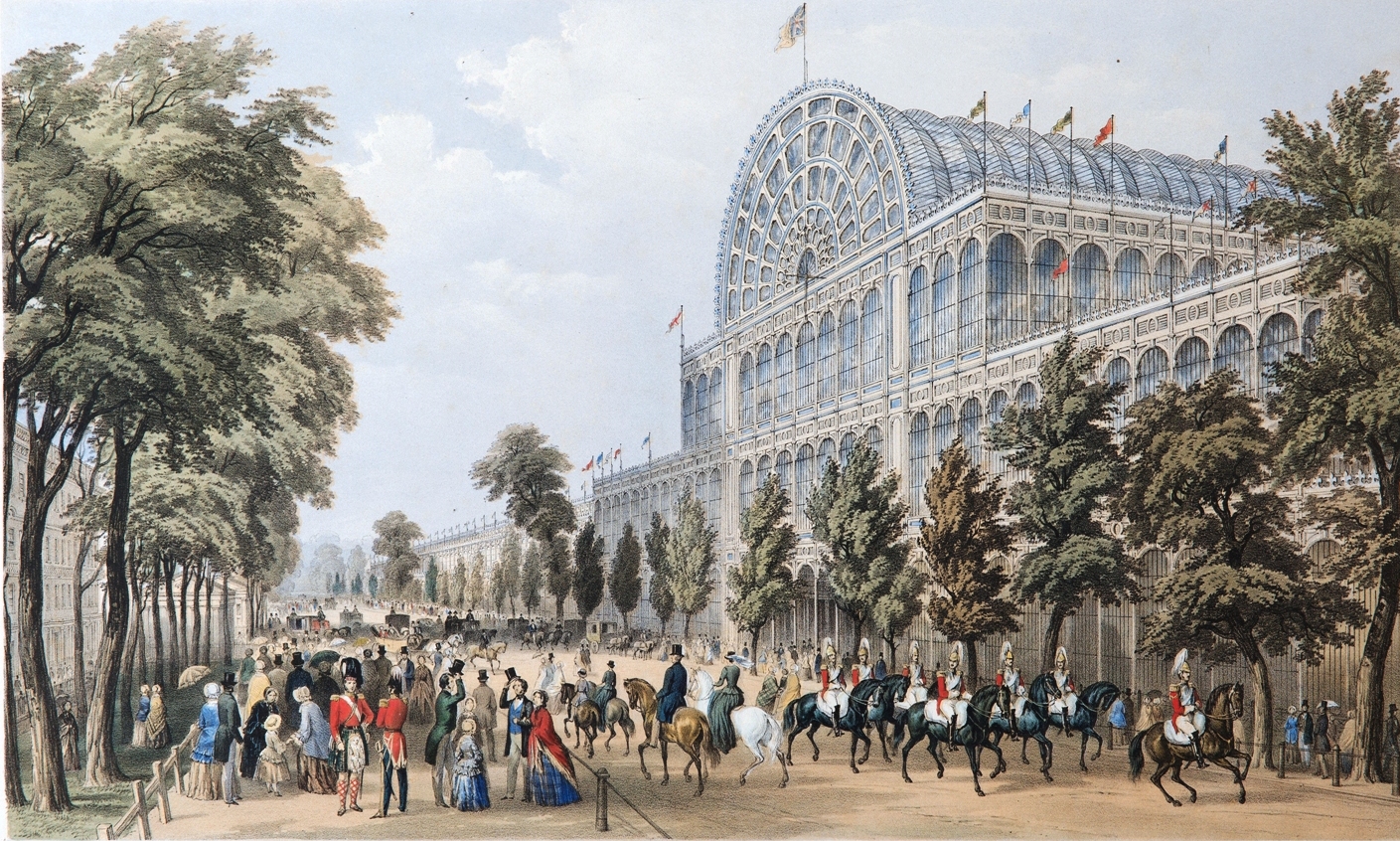
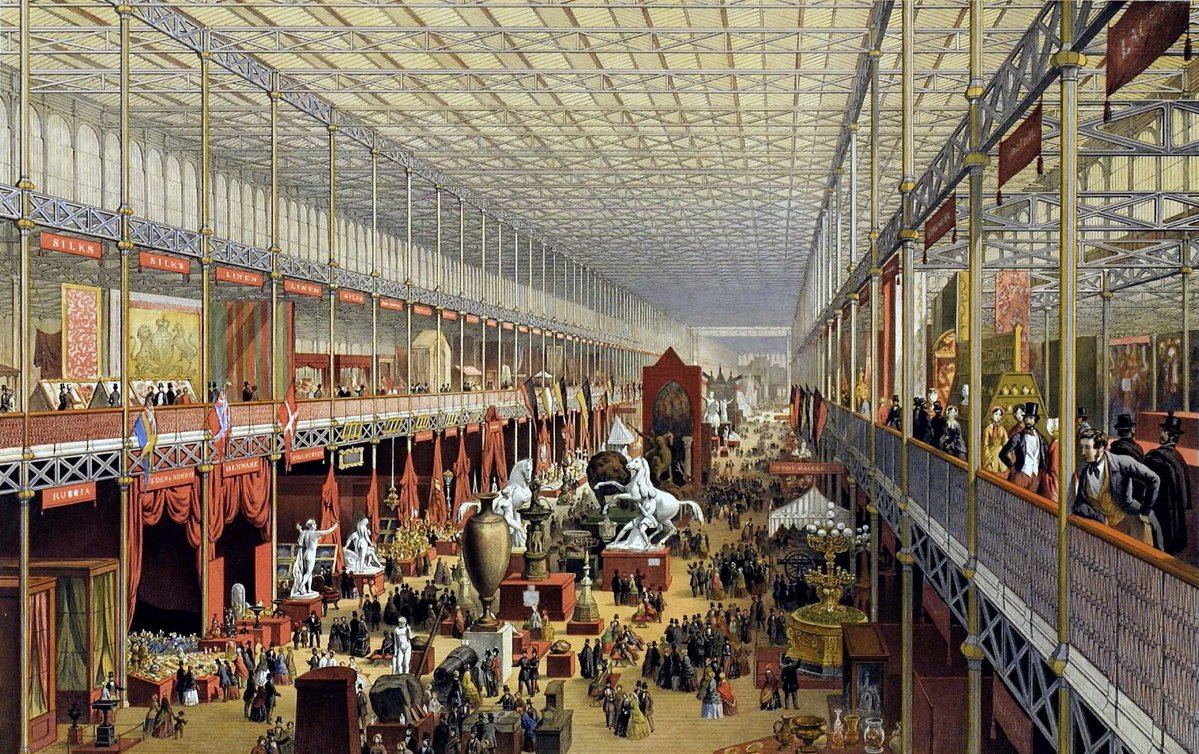
Inside the Great Exhibition of 1851