

Originally intended for future expansion of the museum building, the grounds were landscaped when financial constraints led to a smaller building than initially planned. Over the years, the gardens have served a variety of purposes, from growing food to support troops during the First World War to providing sandpits for the decomposition of whale carcasses used in museum exhibitions.
In 2022, the museum's five-acre gardens closed for a major redevelopment as part of its Urban Nature Project, an ambitious initiative to support nature recovery across the UK. Reopened on 18 July 2024, the transformed gardens offer a free, accessible green space in the heart of London, bringing together biodiversity, scientific research, education and the natural history of our planet.
Visitors entering from Exhibition Road can discover the Evolution Garden, an immersive journey through 2.7 billion years of Earth's history. A timeline of plants, geology and representations of reptiles, birds and mammals brings the story of evolution to life.
At the heart of the Jurassic garden, a striking bronze cast of the museum's much-loved Diplodocus takes centre stage. Visitors can follow the story of ancient life, touch fossils, spot a grazing Hypsilophodon and walk among the footprints of prehistoric creatures. It's an opportunity to explore the history of life on Earth while discovering the connections between species and their changing environments.
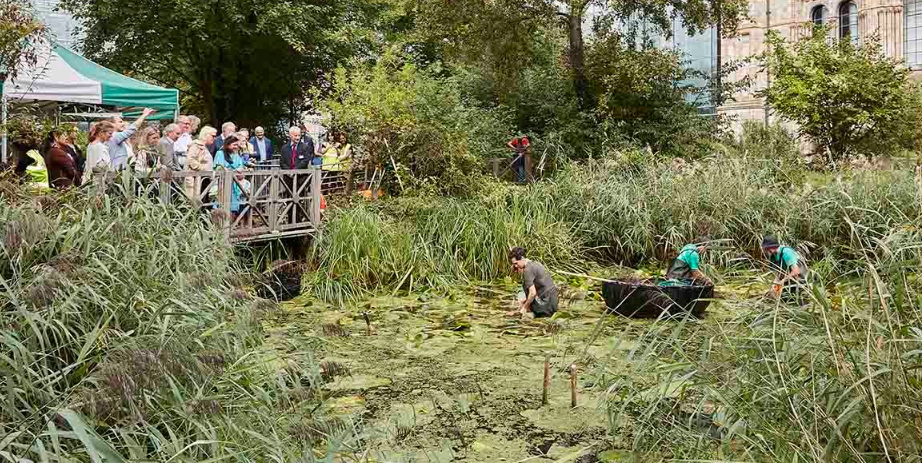
Formerly known as the Wildlife Garden, the Nature Discovery Garden is a living laboratory where visitors and scientists can explore, identify and monitor wildlife in an urban environment.
A network of sensors collects environmental data, alongside environmental DNA (eDNA) sampling, to help researchers build a detailed picture of the life supported by the gardens. This innovative approach makes the site one of the most intensively studied urban environments of its kind worldwide, providing valuable opportunities to advance conservation science and understand how nature can thrive in cities.
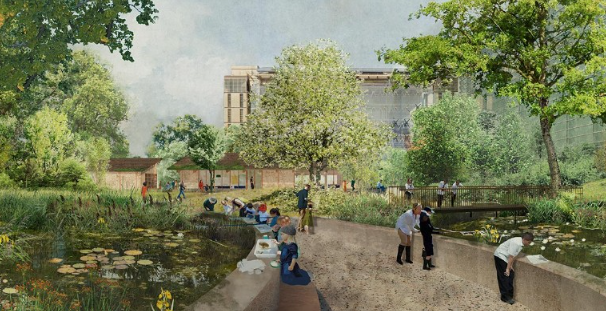
The redevelopment also introduces a new Nature Activity Centre, providing facilities for scientific research, educational activities and community engagement.
For visitors looking to relax, The Garden Kitchen adds a café and function space within the gardens, offering a peaceful retreat from the busy city. Together, these facilities create a welcoming destination for learning, connecting with nature and spending time outdoors.
The Natural History Museum gardens redevelopment places sustainability at the heart of its design. The project set ambitious environmental goals, including removing more carbon from the atmosphere than it contributed, using 100% renewable energy during construction and beyond, and achieving zero waste.
Its innovative approach to sustainable construction was recognised with a silver award in the European category at the Holcim Foundation Awards for Sustainable Construction. The project demonstrates how urban green spaces can support wildlife, contribute to nature recovery and inspire more sustainable approaches to building and design.
Whether you're interested in evolution, urban wildlife, biodiversity or sustainable design, the Natural History Museum gardens offer a unique opportunity to experience nature in central London.
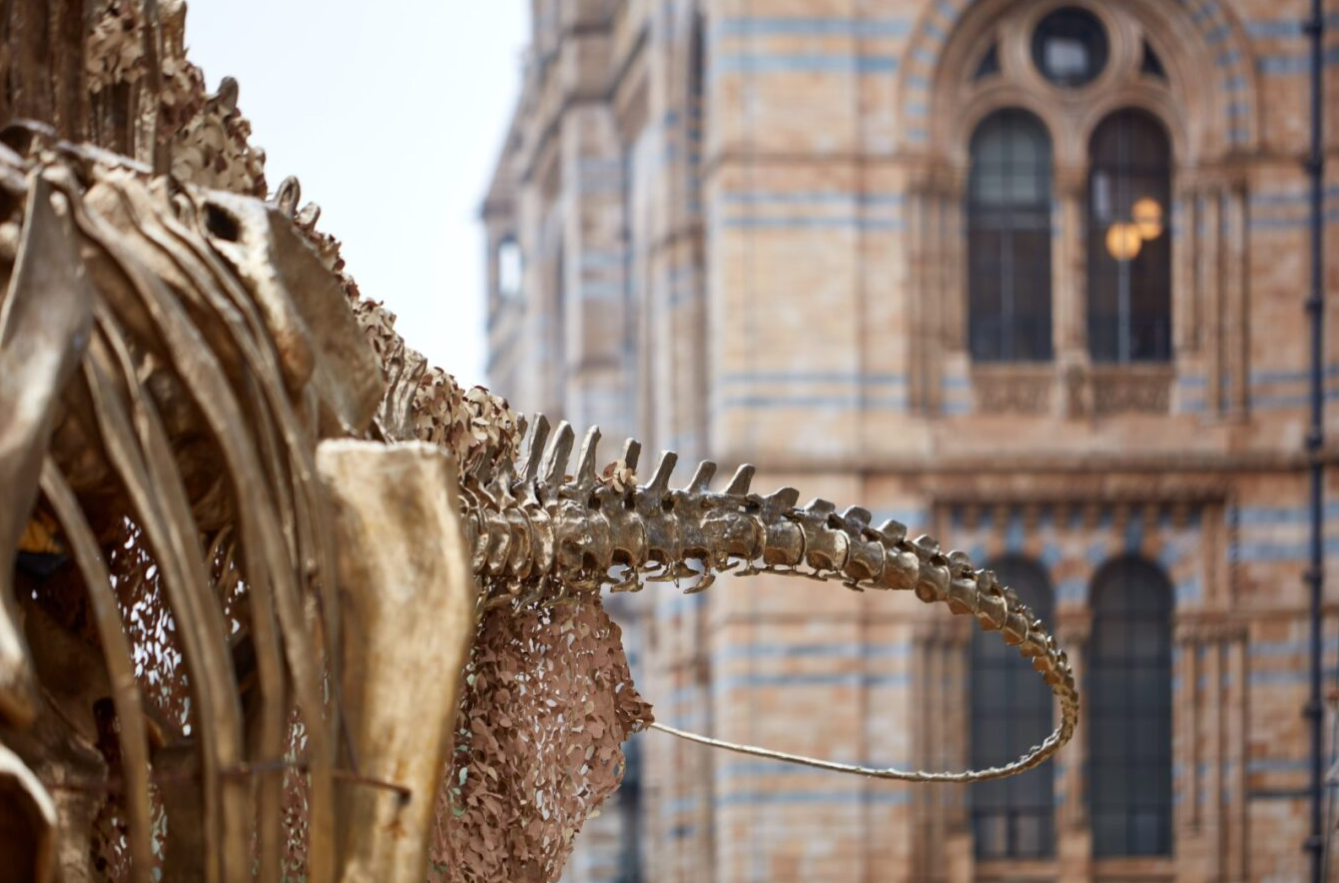
New Bronze Diplodocus Sculpture at the Natural History Museum. © The Trustees of the Natural History Museum, London
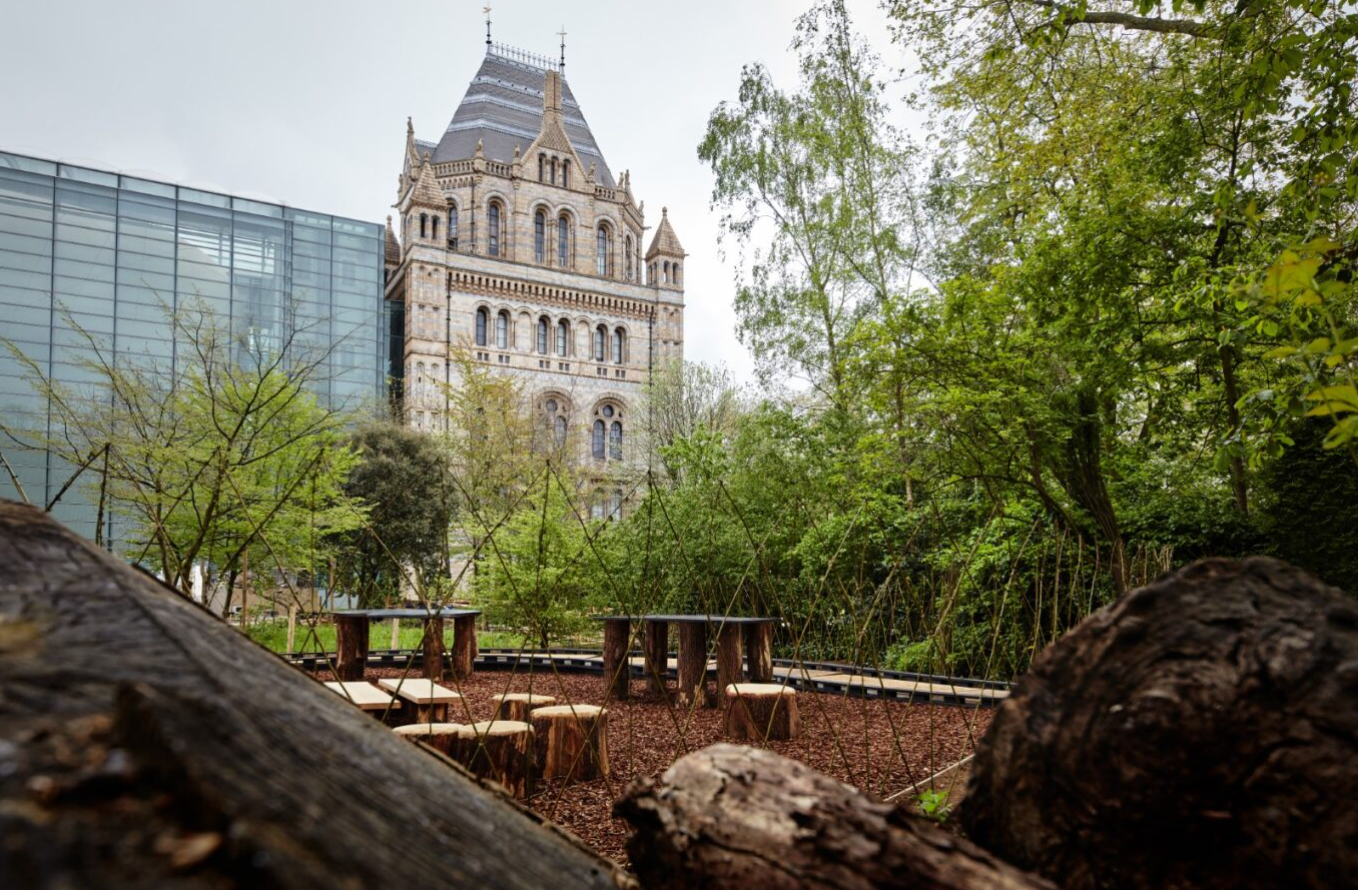
The Natural History Museum’s newly transformed gardens will provide visitors with a new outdoor space to rest, relax and connect with nature. © The Trustees of the Natural History Museum, London