The Urban Nature Project aims to reconnect people with nature, raise awareness of urban biodiversity and inspire a UK-wide movement to protect the natural world.
Led by the Natural History Museum in partnership with museums and wildlife organisations, the project combines a major transformation of the Museum’s gardens with a national learning programme for young people, families and schools.
It will include an education centre, citizen science initiatives and a scientific ‘living lab’, where researchers can study urban wildlife and share their findings with partners around the world. Online, onsite and national monitoring programmes will also help track changes in the UK’s urban nature.
The Urban Nature Project responds to the urgent need to monitor changes in urban biodiversity and address the skills gap in wildlife research and conservation.
It aims to encourage people to explore and appreciate the nature on their doorsteps, while building on the Museum’s scientific research and public engagement work. Through learning opportunities and hands-on activities, the project will help people understand the value of nature and feel empowered to protect it.
A key priority is to reach diverse audiences who face barriers to accessing nature. By creating opportunities to learn, explore and take part in scientific research, the project aims to help people across the UK develop lifelong connections with the natural world.
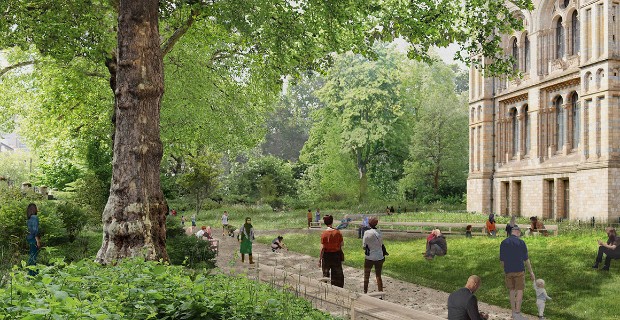
The redesigned five-acre gardens will provide a fully accessible green space and biodiversity hub in the heart of London. Museum scientists and external experts are working together to protect existing wildlife and expand the range of habitats on site.
Despite covering just one acre, the existing gardens contain examples of woodland, grassland, scrub, heath, fen, aquatic, reedbed, hedgerow and urban habitats. The plans will extend these habitats, creating more opportunities for wildlife to thrive.
Around 3,400 species have been recorded in the existing Wildlife Garden over the years, including some recorded there for the first time. Each autumn, three Greyface Dartmoor sheep also help manage the garden sustainably.
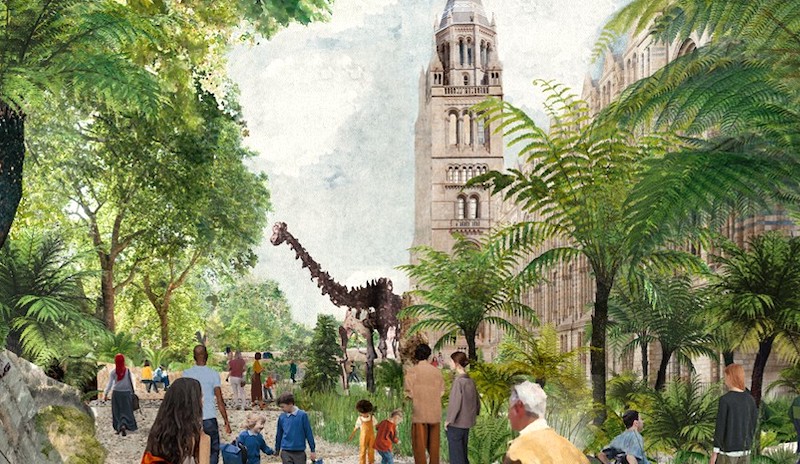
The redesigned gardens will take visitors on a journey through the changing natural world, combining opportunities to connect with nature with insights into the history of life on Earth.
A new cast of Dippy, the Museum’s iconic diplodocus, will overlook the east gardens. Here, plants and fossils representing different geological eras will help visitors explore Earth’s history and understand how human activity has affected the planet in a relatively short period of time.
The west gardens will showcase the biodiversity found in urban environments across the UK. Different habitats will demonstrate how wildlife can thrive in cities and highlight the importance of creating and protecting green spaces.
An outdoor learning centre will support the Museum’s national education programme, offering activities for a wide range of audiences and encouraging people to engage with nature first-hand.
The South Kensington gardens will also serve as a living laboratory, bringing together scientists, volunteers and members of the public to study changes in urban nature.
Research findings will be shared across a national network of partners, helping to improve understanding of urban biodiversity and support conservation efforts.
Through accessible green spaces, scientific research and year-round learning opportunities, the Urban Nature Project aims to create a model for sustainable urban nature and inspire more people to help protect wildlife for future generations.